Monday, 1 July 2013

Remembering Lourdes Before the Floods

In about three weeks’ time, we leave on pilgrimage to Lourdes. Just ten days ago flash floods - the worst for a century - devastated much of Lourdes, leaving the national Shrine under several feet of mud and debris, and many hotels and businesses severely damaged. The mayor of Lourdes said the damage ran into “tens of millions of Euros” and the clean-up operation could take months. (Lourdes is the second-biggest hotel site in France with six million visitors a year).

            I will report on the situation when we get there but, in the meantime, I thought you might enjoy this report from last year’s pilgrimage to Lourdes.

*************************************************************************
            My wife and I made our first pilgrimage to Lourdes this year, joining the more than 700 travellers from Arundel & Brighton Diocese. We decided to travel as able pilgrims, not sure if we were fit enough to act as helpers. Apart from a weekend pilgrimage to Paris earlier this year in the company of some wonderfully caring and spiritual sisters from the Vincentians in Partnership spirituality group, our prior pilgrimage experience was virtually zero.
            We flew to Toulouse in the company of seven friends from Brighton. Three of our group used wheelchairs and it was good to see how practiced and helpful the Easyjet staff were. 


             Despite thirty years of intensive international travel, I had never before seen a hotel’s owners and waiting staff greet travellers with laughter, hugs and squeals of joy. But L’Europe is no ordinary hotel. It is one of ten hotels (out of the 270 or so in Lourdes) used by A&B Diocese to house its pilgrims. It has a well-earned reputation for friendliness and spirituality. Our bedroom had two religious pictures and a crucifix on the wall, and outside in the second-floor corridor were displayed dozens of holy prints and paintings – plus a complete set of Stations of the Cross - while statues of saints lined the staircase to the ground floor.  
     
            On arriving we received the Lourdes Pilgrim’s Handbook, which was an indispensible guide to the week’s activities, scheduling daily masses, rosaries, Ways of the Cross, reconciliation and healing services, processions, visits to the Baths, a presentation by the Redshirts - and even hotel parties! Thankfully, the events were optional and we were counselled not to do more than we were capable of; wise advice, as, one afternoon, exhausted, we stumbled into bed and only staggered out three hours later determined not to miss the four-course dinner with its wonderful French sauces.


            Arriving about ten in the evening on the first night, we hastily unpacked and made our way through the crowded streets towards the Domain, the area surrounding the Grotto, just a 15 minute walk from our hotel. There were dozens of small shops lining the way, every one still open, and almost every one selling religious objects, from small plastic water bottles in the shape of the Blessed Virgin to huge candles for several hundred Euros. Hundreds of pilgrims were milling about, shopping and processing, there were quite a few wheelchairs and many helpers wore old-style nurse’s uniforms. However, shop staff complained that it was much quieter than usual; they said numbers of pilgrims were significantly down - especially the Italians, allegedly the best spenders - due to the Euro crisis.

            Entering the Domain, we immediately left the profane and noisy world for sacred ground. The sound levels fell dramatically, the clamour of commerce vanished and all that could be heard was the shuffle of feet, the rubber whoosh of wheelchairs, muted talk in a dozen languages, and the hum of prayers. To our left was the spectacular floodlit Basilica of the Rosary with its soaring spires. We passed two pilgrims carrying a huge candle on their shoulders, reminding me of the assistants who carry the caber to the next competitor at Scottish Highland Games....On we went, past the Lourdes Water taps, booths for the sale of candles and souvenir medallions, joining streams of pilgrims all headed in the same direction.          
 
       
            All paths lead to the Grotto, the heart of the Domain, the reason for its existence. At eleven o’clock at night there were still about one hundred pilgrims in silent prayer and adoration, many kneeling. The Grotto, a hollow in the rock face worn smooth in part by the caresses of pilgrims, was lit by the soft glow of dozens of candles, and dwarfed by the massive Basilica of the Immaculate Conception above. In a niche in the rock above our heads was a life-size statue of the Blessed Virgin, placed in the very spot in which she had appeared to Saint Bernadette 154 years before. We stood where more than 200 million people have stood since 1860 and, for just a moment, time seemed to stop. Prayer was as natural as breathing in this place of stillness and presence.    

            Beyond the Grotto we passed a small forest of burning candles in metal stands before we came to the Baths where pilgrims bathe in the miraculous waters that sprang from the Grotto. In the distance, in the darkness on the other side of the river Gave, were various places of interest including chapels, a Way of the Cross, the new Water Walk, and the Accueil hospital for sick pilgrims.
 

            The next day the main group of pilgrims arrived and we joined the week of activities that comprised the official A&B Diocesan Pilgrimage. Every morning we processed to the diocesan mass, streaming from our separate hotels, led by a vanguard of wheelchairs, reversing direction after mass to hurry back for midday lunch. After lunch we sallied forth to various activities and then, noticeably slower, returned for dinner at seven. Afterwards, some pilgrims unwound in the hotel bar, others explored the town, a few ventured back to the Domain to pray – and I suspect as many hurried to the Little Flower, a cafe bar where good company, song and drinks attract many from A&B.
            The week passed all too swiftly, time seemed to accelerate at the end, and all too soon Paul and Mary, our very capable hotel leaders, were marshalling us onto the coach for Toulouse airport. It is impossible to recall every detail of that memorable week, but here are a few observations.

            The Domain - or Sanctuary of Our Lady of Lourdes, to give it its proper title - is visually spectacular with large open spaces overseen by the soaring spires of the Upper Basilica and the dramatic Byzantine style of the Rosary Basilica with its dome surmounted by a huge gilded crown and cross. But, unfortunately perhaps, to modern visitors the spires also bear a disquieting resemblance to the centrepiece of Mr Disney’s parks, and the grand open space where thousands gather also echoes the great public squares of capital cities.
 

            What is different – what blew my socks off - was the Basilica of Pius X, the largest church in the Domain, holding 25,000 worshippers. Built mostly underground in 1958 of grey pre-stressed concrete pillars and beams that cross the low ceiling, it has been described as an underground car park or an upturned boat. This bare concrete cavern has little natural light, is cold and draughty and has poor acoustics. But, to me, this austere place is also beautiful and full of meaning, a reminder that God is everywhere. It may be cold but as you walk around you see dozens of glowing stained glass panels that depict the mysteries of faith, above them are almost 40 large tapestry images of saints and martyrs, lessons in holiness, and, moving on, the eye is drawn to an appropriately simple but very striking modern crucifix over the high altar. Opposite the choir stall is the entrance to an almost-hidden side chapel. Slip inside and there is an altar with a ‘fragment of the soutane worn by Pope John Paul on the 13th May 1981 and marked with his blood’. Pause in prayer for a moment and wonder why you ever thought this was like a car park - and the next time you park in a multi story, remember that God is with you!
            The anointing of the sick took place on the fifth day, also in the Pius X Basilica. We had been warned by the priests staying with our hotel group to take tissues, a wise precaution. Emotionally charged? Certainly. My eyes were dry but there was a lump in my throat. Our hotel group stood in a circle behind the wheelchairs, our hands on the sick pilgrims, willing God’s love and mercy through the intervention of the Blessed Virgin of Lourdes as Fr. Laurence, accompanied by Fr. Terry and Deacon Ian, blessed each sick pilgrim. In the deep silence that followed, tears flowed, people reached out and touched, held each other. We were reminded that we are all sick and need healing.

            I was a reluctant candidate for the Baths and went along, more in the spirit of ‘try anything once’ rather than undertaking a religious experience. Yes, you disrobe completely and, clad only in a cold, wet robe the size of a bath towel, you descend up to your chest in chilly water to say your prayers.  No, there is no towel to dry yourself with afterwards, you put on your own clothes and walk out. Yes, you are completely dry twenty seconds after putting your clothes on. No, I can’t explain it either but, God-willing, I plan to go back to the Baths next year and maybe I can work it out then. If not, I’m not going to worry - I’ve found a new way to worship.    

            The sick are at the heart of Lourdes. The sight of dozens of wheelchairs and wheeled beds leading the Marian Torchlight Procession or the Blessed Sacrament Procession testifies to their special and honoured place. However, I was puzzled why Lourdes continues to attract the sick in such numbers when fewer than 70 miraculous cures have been validated by the Church. Even the reported 2,000 to 5,000 documented cures is a small number when set against the 200 million visitors to date. To put it another way, with a reported six million visitors a year, if we assume 10% are sick and if only 1% of these were healed, that would still be 6,000 sudden healings each year....there is a temptation to apply the logic and the maths of the Lotto and Premium Bonds to the miraculous!
          

            But there is an alternative perspective. Lourdes points to the next world, not to this one - even Saint Bernadette would suffer for the rest of her short life. The Blessed Virgin did not promise anything, certainly not an end to pain or to malignant neoplasm. She did ask for penance and prayer for the conversion of sinners. Every pilgrim to Lourdes is sick through sin and healing occurs on many levels, in the waters, in front of the Blessed Sacrament, in the sacrament of reconciliation, at Lourdes, and after returning home. There are undoubtedly miraculous physical healings, but perhaps the real miracle is the change that Lourdes induces in the pilgrim: feelings and displays of love, caring and service; of humility; of self-awareness and introspection; of humbled recognition of our failure to love, and spontaneous gratitude for the Blessed Mother’s unceasing intercession. If that is the case, then the statistics should reflect a 100% effect, for no-one is untouched by Lourdes. 
 
            There is obviously much more to recall, such as the good humour and selfless inspiration of the helpers; the chance friendships made and the joy of both helping and being helped; the cheerful greetings of the Redshirts every day – regardless of the weather; praying the rosary with our hotel group, opposite the Grotto, as twilight fell; Bishop Kieran’s uncanny ability to teleport from one place to another with friendly greetings; the gruelling High Stations; the Moon girls’ hilarious delivery of ‘Plastic Jesus on my Dashboard’ at the hotel party; the streaming river of light that is the torchlight procession, and so on. But, better than a second-hand description, watch out for the announcement of the 2013 A& B Diocese Lourdes Pilgrimage and book your place. Your Mother is waiting!     


Wednesday, 26 June 2013

The Rosary - Repetition and Variation


(the favourite one)

 
 Exactly when the Rosary prayer was first created is subject to debate, but there seems general agreement that the basic structure began to emerge in the eleventh to thirteenth centuries and developed steadily ever since, with the latest accretion about ten years ago when Pope John Paul II added the Luminous Mysteries.

Of course, most of the Hail Mary is taken directly from the New Testament. It is the structured sequence of it and the accompanying prayers, the Apostles' Creed, the Our Father and the Gloria, and their interaction with the developing Mysteries, that have evolved over the last few hundred years.

(the Sundays/Holy Days one)

One suggestion is that the present form of the Rosary developed from the medieval practise of monks who prayed the 150 psalms each day. Since their lay brethren could not read Latin they were unable to pray the psalms. Instead, they recited the Our Father 150 times a day instead, using a string of 150 beads to keep their place. True or not, it’s a nice story!
And it also raises the question of repetition, an aspect of the Rosary that is often criticised. If we say a full Rosary we will be saying the Hail Mary more than 200 times (although, more usually, one set of mysteries and 50 Hail Marys is said daily). Didn’t Jesus say that one should not babble like pagans with ‘many words’ (Matthew 6:7)?

(the backup one)
 
In fact, it is quite clear that Jesus wanted his listeners to avoid thoughtless and vain repetition, the idea that there is a magic effect in repeating certain words or phrases like a mantra. He taught that the Father knows what we need before we ask for it but this does not make prayer superfluous – indeed Jesus gave us the Our Father as our prayer model.
Interestingly, there is plenty of evidence that repeating prayers is ‘normal’ and has a long history.

A few examples: Jesus attended Passover, which has fixed prayers that are repeated annually;  He worshiped with the book of Psalms, which is a collection of hymns and prayers that is used repeatedly; He said the same prayer three times in the Garden of Gethsemane ( Matthew 26: 44); the Didache -  parts of which are likely older than parts of the New Testament – instructs the first Christians to pray the Our Father three times a day; early monks attempted to sing the entire psalter every week, and by the fifth century St. Benedict’s Rule had formalised psalms, prayers and readings into the Liturgy of the Hours; by the year 800, lay brothers in certain Benedictine monasteries were praying 50 Paternosters for the deceased; finally, in the book of Revelation 4:8 we read that the heavenly host repeats ‘Holy, Holy Holy is the Lord God Almighty who was, and is, and is to come’ day and night.
The Rosary is not a prayer of words so much as a prayer of meditation, and in the complete Rosary we contemplate the incarnation, birth, life, suffering, death, resurrection and glory of Jesus. The individual mysteries form the background to the repeated prayers, blending with the words and striking their own resonances.

However, the conscious mind sometimes rebels – or mine certainly does – against the rhythmic repetition of the Hail Mary. The mind struggles to recall the meaning and significance of the individual words while contemplating the mystery. Too often, the conscious mind wanders, then stalls, there is a sort of time warp effect and one recovers consciousness, realising that a whole bunch of Hail Marys have just flowed past while the conscious mind was elsewhere.  
(the Lourdes souvenir one)
 
Over time, I found that some very minor changes to the prayers give enough variation to keep me grounded, while improving the quality of the prayer. Two examples:
Occasionally, with the Hail Mary itself, I introduce a variation to emphasise the particular status of the BV Mary (an innovation of value to former Calvinists who have inherited the view that attention to Mary diminishes the centrality of Christ) :

‘...Holy, holy, holy Mary, Mother of God,
Pray for us sinners, now and at the end of the world.’     

In the Glory Be I occasionally us the following formula to emphasise the separate contribution of the component parts of the Trinity:

Glory be to the Father,
And to the Son, Who died for us,
And to the Holy Spirit, Who is with us still,
As it was in the beginning.....

 I’ve also learned the useful lesson that there must be limits to creative adaptation...Once, I considered making what I thought a minor ‘improvement’ to the Our Father, only to receive the very clear intuition that some prayers are already perfect!

Saturday, 22 June 2013

Guns, Tanks, Planes and Leafy Lanes

Boys and their guns...Wednesday's trip was designed to appeal to younger son with a visit to Muckleburgh Military Collection, ‘the UK’s largest privately owned military museum’ as the brochure proudly boasts. On the coast of Norfolk, within spitting distance of the sea, and based in a former NAAFI building, is a large collection of tanks and other tracked vehicles, field guns, missiles, support vehicles, small arms and ordinance, uniforms, models – and the occasional plane, including a rusting Harrier Jump Jet, stripped of its engine.
 
Driving there, we threaded our way along narrow leafy lanes, no other car in sight for several miles, past bright coloured speckles of flowers in the hedgerows. Navigating the small quiet villages, it struck me how the focal point in many cases was the village war memorial.

When our boys were younger, their favourite museum was the Imperial War Museum in London – an excellent museum with extensive displays on the history of warfare, including its technology, the personalities and politics, the heroism and the horror of it all. Especially memorable and moving are the exhibitions on the two world wars and on the Holocaust. The museum is housed in the former ‘Bedlam’ hospital, the world’s oldest institution for people with mental disorders. It can't be a coincidence!
 

While Muckleburgh is much smaller, it has some spectacular displays of weapons and ammunition, as well as personal items from the Suffolk and Norfolk Yeomanry collection (plus a model of the Duke of Wellington’s horse – so huge I suspect he used a stepladder to mount it.) As fascinating and appalling as the variety of killing tools are, it is the personal belongings of the soldiers that resonate with me, little things that speak of personality or conditions of the time.

On Thursday, we went to Sandringham, the Queen’s country house and estate. The House is set in 60 acres of spectacular gardens, with lofty pine and oak trees, clouds of rhodendron, azalias, magnolia and forsythia, lawns and glades, lakes and streams. It seemed that there were many more hikers and dog-walkers in the car park than stately home visitors.
 
The House did not disappoint. Crammed with objects d’art and curios, priceless jade, porcelain, silverware, china, paintings and tapestries, gilt everywhere, each spectacular room leading to the next, and then on to the Lobby which is filled with display cabinets of...guns! I didn’t count them but there could easily have been one hundred or more, mostly shotguns and rifles, many by famous makers like Purdey and Holland & Holland. In the stables museum there were even a couple of carriages used to transport the corpses of hundreds of freshly-shot grouse. Clearly guns and horses are the main hobbies of our royals. 

On Friday there was only one gun in sight, a SA80, the current British military’s assault rifle. It was in a display of equipment at the Cambridge University Air Squadron’s Family Day, held at RAF Wyton Air Base.


Student Officer Robertson took us for a tour of the area. In one hanger we saw ten Grob Tutor aircraft used for elementary flying training by the University Air Squadrons. After inspecting various items of sport and safety equipment, we visited the crew room, the briefing room, the ‘departures’ room - (ok, I forget what it was called!) - and learned that each pilot’s flying helmet is bespoke, personally fitted, and it and the parachute are rigorously checked after each flight.
 
Chatting with the training officer, I was surprised to learn that his biggest concern was with the students’ fitness. We live in an age where PC, video and internet games have taken over from physical sports. For what it’s worth, the students all looked incredibly slim and fit to me (despite wolfing down endless burgers and hot dogs during the lunchtime barbeque).


The control tower was staffed by non-military personnel, one of a number of functions outsourced to independent contractors. As expected, it had a great view of the two runways and we learned about the equipment they use. Hanging from the ceiling above the computers, radar screens and terminals was something I had not expected to see (other than on a warship) – an Aldis lamp. Apparently this is used to flash visual green  or red ‘go’ or ‘stop’ signals to aircraft, and can be seen from the end of the runway, over 8,000 feet away.  

 
After lunch we were treated to an air display by a number of aircraft including high performance light acrobatic planes, a couple of noisy Tucano turboprops that are used by the RAF for fastjet training, and my favourite, an aerial ballet by a stately Lynx helicopter piloted by Royal Navy aircrew. It’s hard to believe that the Lynx has been in service with the navy since the early 1970s.


And so to bed, as they say...

Friday, 14 June 2013

(As Promised) A Few More Photos from the 125th

I took 285 photos by the end of the evening – rather a lot! Now they’ve been whittled down to a more modest 101 and will be on display in the church porch this weekend (and for a modest fee - 40p to 50p depending on size - a copy can be obtained with profits going to Beata Teresa de Calcutta Medical Project in Peru, which is being sponsored by the Sacred Heart Church, Hove, during 2013).

One day I promise to talk about the joys and challenges of photography. Being blessed with more enthusiasm than either ability or knowledge, my appointment as ‘official’ photographer for the 125th anniversary was a mixed blessing. Among the joys was the discovery of the choir loft, a secret hidey-hole filled with jolly people, who showed no signs of altitude sickness despite being perched so high above the congregation. And then there was the freedom to wander at will, creeping up on unsuspecting souls and firing off the flashgun like it was the beginning of the grouse season. People were very charitable though, especially after a glass (or more) of red at the post-mass party.  
On the other hand, among the challenges was the discovery that elbows, legs and tables had somehow intruded into photographs, forcing me to crop, crop and crop again until the pixel count was positively anemic. Then there were the weird colour shifts, showing that the camera (and I) had got the white balance wrong, due to the unhealthy mix of daylight, flash, tungsten and fluorescent. Thanks to Adobe Photoshop, not every person ended with an orange permatan. Also, at one stage my old flashgun refused to talk with the camera and simply sulked, resulting in pictures in which the only visible parts were the whites of the eyes! Ah well, it was a great learning experience!

Now, a few photos:
A general view of the church interior, featuring the new red carpet (it was green until a couple of months ago).


 And we end with four photos from the party (out of the 57 that will go up in the church porch). It was a great evening, full of companionship and laughter, it really felt good to be part of a sociable, caring, loving, enthused, prayerful, positive Church. Roll on the 150th anniversary ( - we’ve already booked the Bishop and, if I’m still around, I’ll make sure we get a decent photographer!)   


Saturday, 8 June 2013

'125 Not Out' for The Sacred Heart Church in Hove - Hooray!


On Friday evening, 7th June, Sacred Heart Church in Hove celebrated its 125th birthday with a special Mass, followed by a party.
Around 350 parishioners attended the Mass of the Feast of the Sacred Heart, including former priests of the parish, invited clergy from the city and some distinguished guests.


The Church was filled, with latecomers sitting on the benches by the rear entrance or on the floor in front of the baptistery. One of my favourite photographs is the one I took from the choir loft, accessed via a circular stone staircase (like the one in the Norman Keep at nearby Arundel Castle). The view was well worth the climb.

 
We had a couple of particularly important guests. First, the Rt. Rev. Kieran Conry, Roman Catholic Bishop of Arundel & Brighton, who presided at the Mass. Here he is with our Parish Priest, Fr. Kevin Dring.


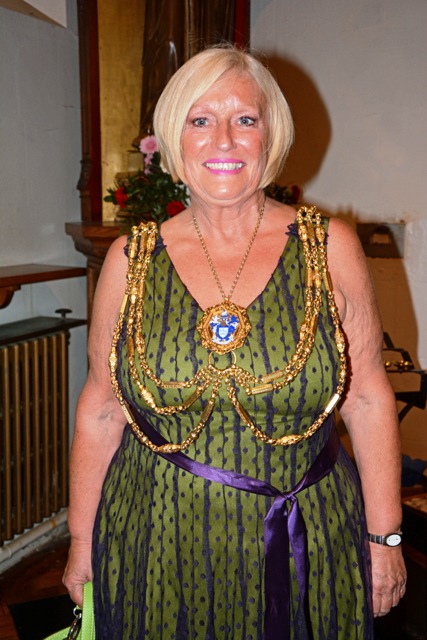
The other key guest was - let me get the title right - The Right Worshipful the Mayor of Brighton & Hove City Council, Councillor Denise Cobb. Mayor Cobb was recently elected and this was one of her first official engagements, so we were particularly honoured to have her with us.


Mayor Cobb attended with her Consort, Luna-Rose Cobb, and had the front pew, up close to the action. I was the church's 'Official Photographer' for the evening, and she was most gracious when I occasionally thrust my lens close to the mayoral nose and fired off the flash.


(Incidentally, the mayor's official photographer, Tony Mould, was also in attendance, carrying a Nikon D4 and a rather large telephoto lens. I sneaked out to have a look at the mayor's car and was delighted to see that the number plate was a special one, acknowledging the Hove part of Brighton & Hove).

During the Mass, Bishop Conry spoke of the importance of parish life extending into the wider community, supporting and enriching it, illustrated by the Sacred Heart’s participation in the Brighton & Hove Churches Winter Night Shelter project. His comments were apt, thought-provoking and very well received; several parishioners came up to me afterwards to say that they had been both impressed and moved by the homily.     

(To be honest, much of the Bishop's words passed over my head. I was concerned that my photos were not very clear. Urgently, I checked the camera settings again and again...and then the answer dawned. There was nothing wrong with the photos, it was just that my spectacles had steamed up and the photos only appeared unsharp!)

Music was a key part of the Mass. Two adult choirs, a children’s choir and a Spanish-language choir joined the church organ in a variety of hymns and praise, including Mozart’s 'Ave Verum Corpus' and the Sacred Heart patronal hymn that begins 'O Sacred Heart, our home lies deep in thee'. Usually rather good, I thought our regular choir and organist excelled themselves on this most important night. 


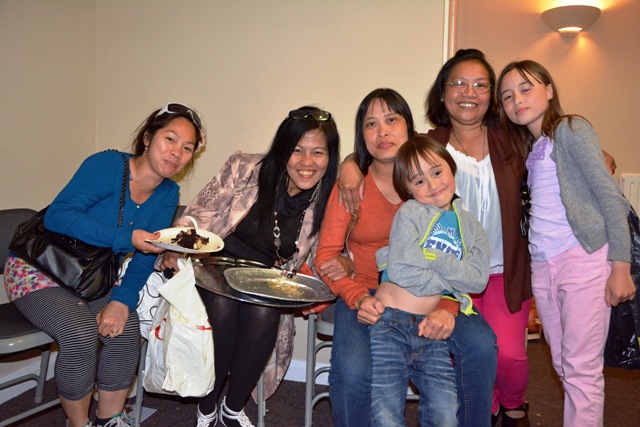
Afterwards, the congregation and guests gathered in the Parish Rooms to cut the celebration cake and enjoy a huge variety of food and drink provided by the parishioners. And I mean huge...for example, here is one table, before the party.


...and this is what the tables looked like just before the party ended.

 
Mayor Cobb spoke of her surprise and delight at the large turnout, evidence of a flourishing church, while Father Kevin stressed the enormous generosity, friendship and goodwill of the parishioners. 


In short, it was a great occasion and at the end of the evening we dismantled the tables, stacked the chairs, disposed of the leftovers, washed up, hovered the carpet...and went home with the sense of a job well done. Now, I have 300 or so photographs of the evening to sort out, so you may see a few more.

Tuesday, 4 June 2013

Chatham Dockyard - Fighting Sailors and A Sailing Writer

We visited the Historic Chatham Dockyard in Kent at the weekend. Elder son wanted to compare it with a museum in Genoa, Italy, for a university project – and I’m a sucker for museums, especially maritime ones, so I was salivating at the prospect.

Chatham is the world’s most complete dockyard from the age of sail with docks, sail lofts, mast houses, a smithery, a wheelwrights’ shop, machine shops etc, with some buildings up to 300 years old. As early as 1588 shipwrights in the Chatham area prepared Queen Elizabeth’s fleet for action against the Spanish Armada. And Chatham Dockyard is where Nelson’s ship Victory was built and launched in 1765. 
It also has a fabulous collection of RNLI lifeboats, the longest ropery in Europe and three historic ships to visit; a Victorian naval sloop, a Cold War submarine and the Second World War destroyer HMS Cavalier.  

 
I was particularly interested in HMS Cavalier, a sister ship to HMS Carron, which was commanded in wartime by John, a brother-in-law of our elderly friend Joan. John earned a DSC and a George Medal, the latter when , though injured by flying debris and partly blinded by fumes, he tried three times, ‘with great fortitude and determination’, to take his ship alongside a burning merchant ship carrying high octane petrol, in order to tow her clear.
HMS Cavalier is at peace now, rooted in the concrete of a dry dock. But she looks like she could spring back into action in a minute. There is hardly a spare inch of space not taken up with some practical or deadly material. We gingerly descended the companionways and ladders and thought that the sailors must have felt like moles living underground, with the cramped quarters and the warren-like passageways. On the other hand, the bridge was open, without a top, it must have been wet and very uncomfortable in rough seas. Fighting is difficult at the best of times, but when you’re also cold, wet, frightened, trying to stay upright...     

(Incidentally, Joan’s husband Peter also served in the Royal Navy and twice had his ship sunk under him. First, in October 1939, when  HMS Royal Oak was torpedoed and sunk at Scapa Flow by a German U-boat with the loss of 833 lives. Next, when HMS Penelope was sunk by another U-boat off Naples in 1944 with the loss of 415 crew. HMS Penelope was also known as ‘HMS Pepperpot’ because of the many shrapnel holes in her caused by numerous bombs dropped from enemy planes.)
Thank God there has been peace in most of Europe for almost 70 years now. But our parents and grandparents endured horrific conditions and made heroic sacrifices to bequeath us freedom and material comfort beyond their imagining. And it wasn’t just the military and other war workers that made sacrifices, wives like Joan worried every time their spouses departed, never knowing if it would be the last goodbye...and yet, Joan believes these were the happiest of times, when she felt most alive. Maybe they just made people tougher in these days!    

Speaking of cramped working conditions, we toured the submarine Ocelot (which was built at Chatham) - and it made the Cavalier feel spacious and comfortable!


To end on a bright note, I walked round a corner and discovered the Pay Office where Charles Dickens’ father worked from 1817-1822. His job was to pay wages to the naval ships’ crews, and sometimes little Charles accompanied him on the Pay Office yacht. Now, that sounds like fun!  


Sunday, 2 June 2013

Hove Joins the Pope in Prayer


On Sunday 2nd June, the Feast of Corpus Christi, around 50 parishioners from the Sacred Heart in Hove joined Pope Francis and millions of people worldwide in a historic Holy Hour of Eucharistic adoration.

From Vietnam to Iceland, from New Zealand to Chile, from Honolulu to Hove, thousands of dioceses and parishes around the world came to a stop between 5.00 and 6.00pm Rome time, and millions of people knelt and joined in prayer in front of the Blessed Eucharist.

For the first time ever cathedrals, parish churches, monasteries, religious houses etc throughout the world were invited to join in the simultaneous Eucharistic adoration, led by Pope Francis from the high altar of St. Peter’s Basilica in Rome.

A part of the Year of Faith initiatives, Pope Francis spelt out the two-fold objectives of this unique occasion.
First, it was to be a sign of unity for the Church throughout the world, so that, obedient to the word of the Lord, she may be “more beautiful, without spot and wrinkle, but holy and without blemish”.

And second, that the Church will comfort and support the needy, including victims of wars, human trafficking, drug trafficking, ‘slave labour’ and all those subject to violence, as well as those deprived of material security (especially the unemployed, the elderly, immigrants, prisoners, the homeless and those who are marginalised).
During the ceremony the Pope included prayers from each of the past six Popes, beginning with Pope Pius XII and concluding with Pope Benedict XVI. The Holy Hour ended in Rome - and in Hove - with solemn benediction with the Blessed Sacrament.